You found the perfect influencer.
Great engagement rate. Right niche. Follower count that fits your budget. Audience demographics that match your target customer.
You reached out. And discovered:
- They haven’t posted relevant content in 3 months
- Their engagement has tanked since the data was captured
- They completely pivoted to a different niche
- The email address bounced
- They already work with your competitor exclusively
Sound familiar? This isn’t bad luck. This is database decay in action.
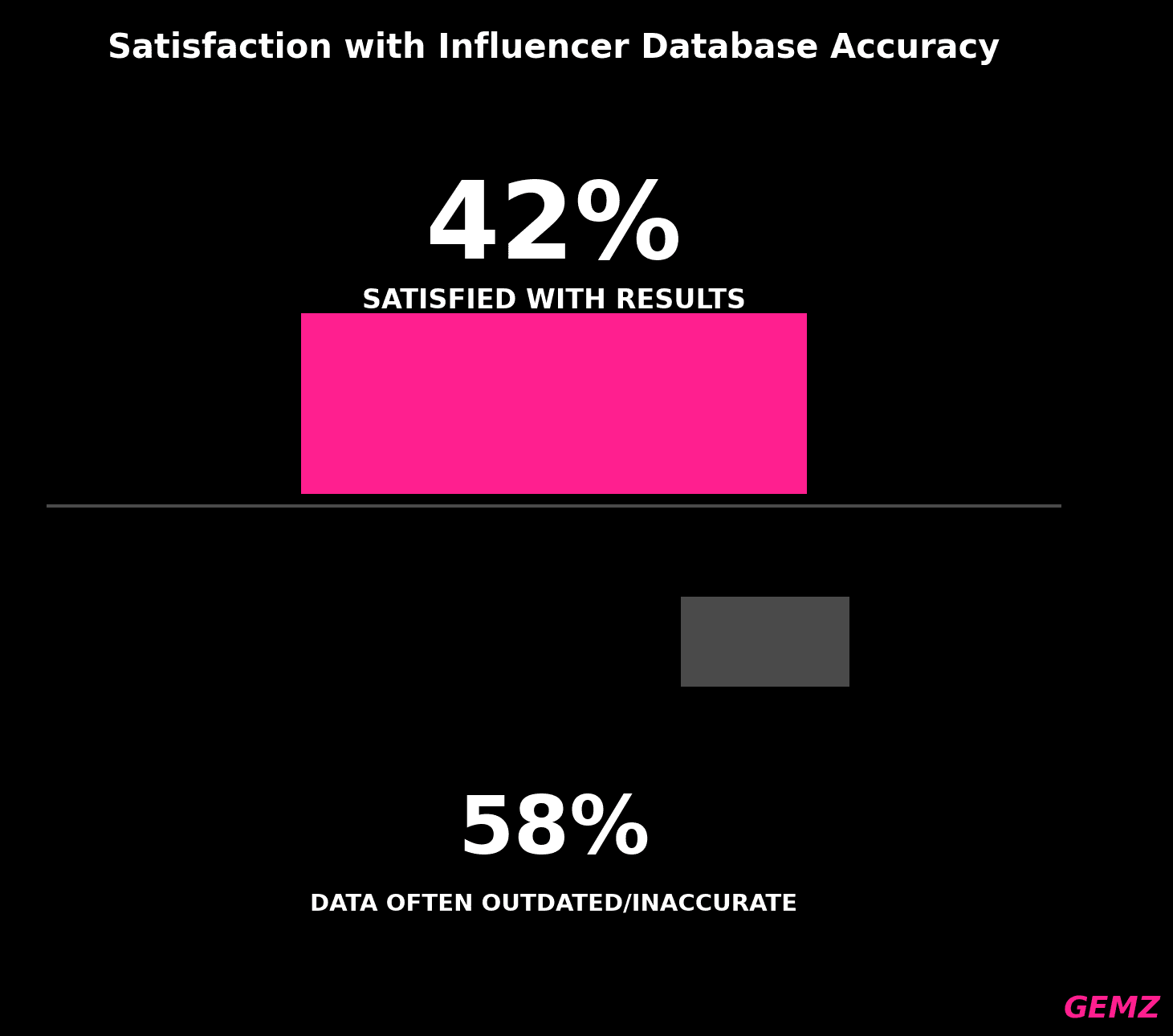
This guide explains why influencer databases show wrong data, how it affects your campaigns, and what alternatives exist for brands that need accurate, current information.
The Fundamental Problem with Influencer Databases
Most influencer marketing platforms—including industry leaders—work the same way:
- Scrape creator profiles from social platforms
- Store that data in a searchable database
- Update the database periodically (weekly, monthly, or quarterly)
- Serve that stored data to users
This approach has a fundamental flaw: social media changes faster than databases update.
Why Scraping Creates Stale Data
The scraping process:
- Automated tools visit creator profiles
- They capture publicly available information (followers, engagement, bio, recent posts)
- This data gets processed and stored
- Users search against this stored snapshot
The problem: The moment data is captured, it starts decaying. What was true when scraped may not be true when you search—days, weeks, or months later.
How Fast Data Goes Stale
Let’s look at what changes and how quickly:
Data Point
Typical Change Rate
Impact
Follower count
Daily (can jump 10%+ overnight)
Budget/tier mismatch
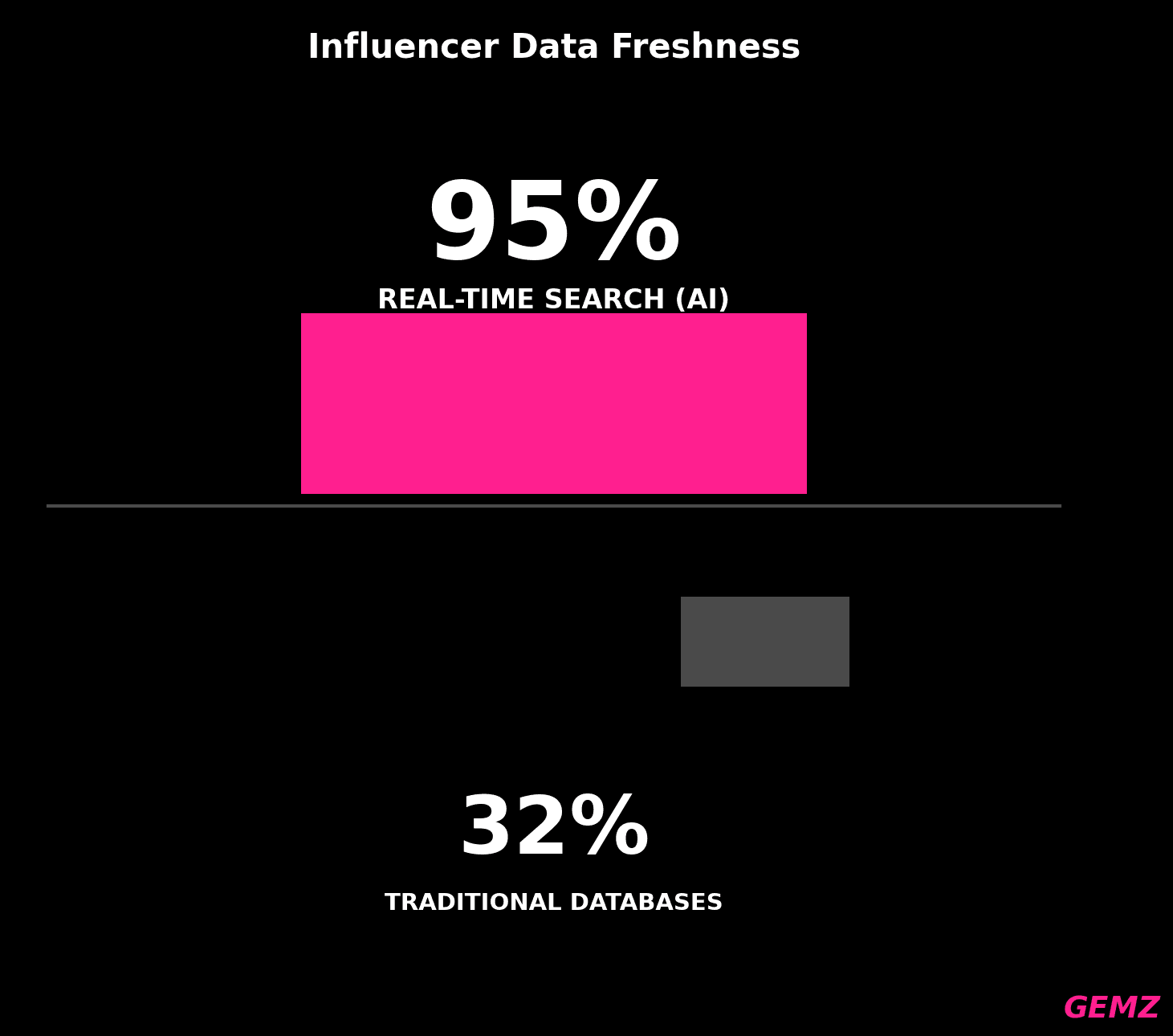
Database Update Frequencies
Here’s what different platforms typically offer:
Premium enterprise platforms: Weekly or bi-weekly updates Standard tools: Monthly updates Budget tools: Quarterly updates or “continuous” (which often means irregular)
Even weekly updates mean data can be 7+ days old when you’re making decisions. In TikTok time, that’s ancient.
Real Costs of Inaccurate Influencer Data
Stale data isn’t just annoying—it has measurable business impact.
Wasted Outreach Effort
The scenario: You build a list of 50 creators based on database information. You craft personalized outreach. You wait for responses.
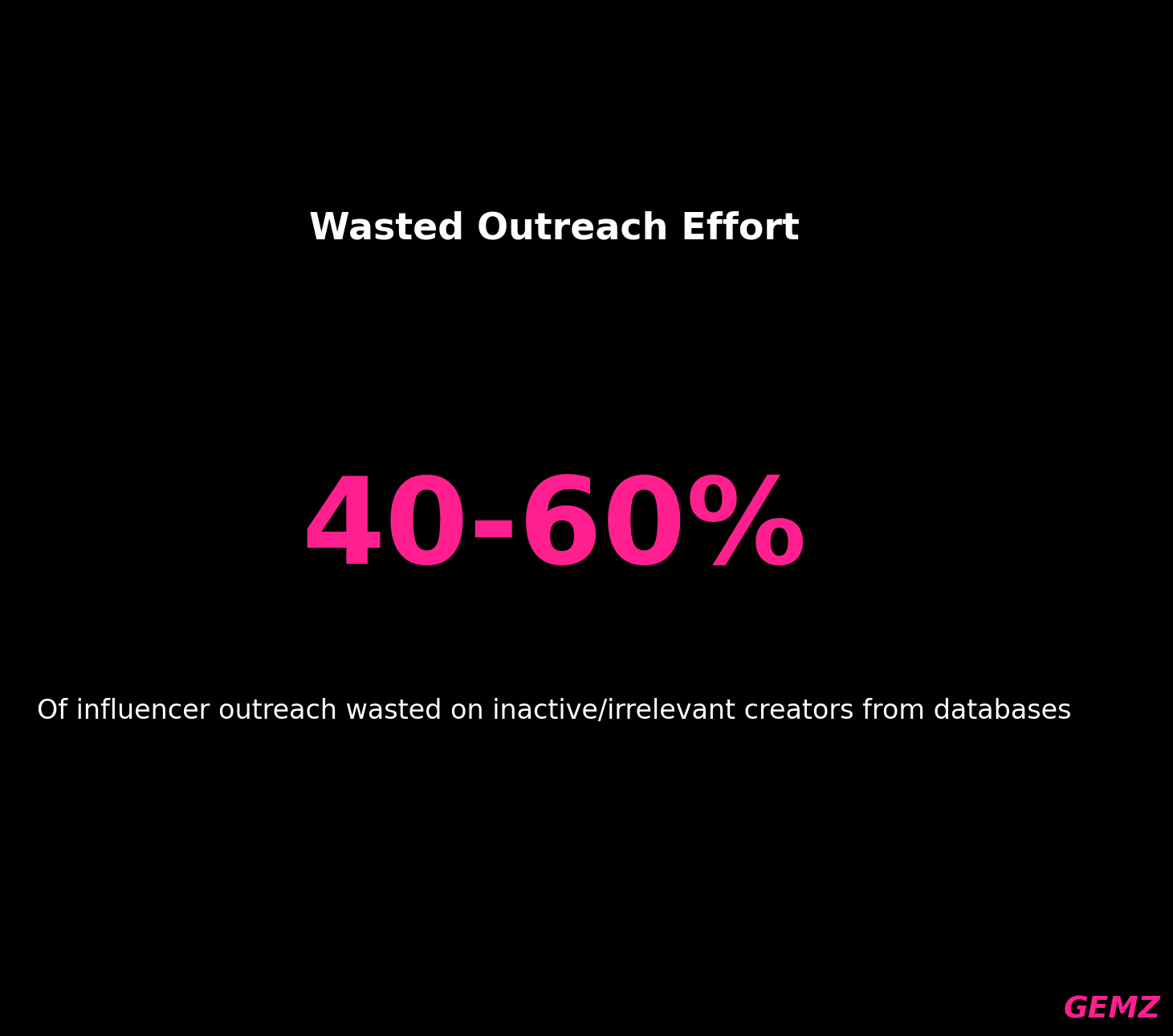
What happens with stale data: - 15% have inactive emails or have changed management - 20% have pivoted away from your niche - 10% are already exclusive with competitors - 15% have significantly different metrics than shown
Net result: 40-60% of your outreach effort is wasted. Your “50 creator” list is effectively 20-30 viable options.
Campaign Performance Failures
The scenario: You selected creators with 4%+ engagement rates in your target niche. You negotiated contracts. You launched.
What happens:
- Three creators now have 1.5% engagement (algorithm changed, they haven’t adapted)
- Two creators pivoted to different content types
- One creator’s audience skews 10 years older than shown
Net result: Campaign underperforms. Leadership questions influencer marketing. Future budgets get cut.
Higher Effective Costs
When data is wrong, you pay for inefficiency:
Discovery time: Instead of 2 hours, you spend 6+ hours vetting inaccurate lists Outreach cycles: Failed outreach means more rounds of prospecting Partnership failures: Wrong-fit creators waste campaign budget Opportunity cost: While fixing problems, competitors capture better partnerships
Strategic Disadvantages
Missed rising talent: Databases capture established creators. Rising talent doesn’t appear until after they’ve already grown—when rates are higher and availability is limited.
Following instead of leading: When everyone uses the same stale databases, everyone finds the same creators. No competitive advantage.
Why This Problem Keeps Getting Worse
The influencer database problem isn’t getting better. It’s getting worse.
Creator Behavior Has Changed
Rapid pivots are normal: Creators used to build careers in single niches. Now, pivoting is common—sometimes monthly—based on trends, algorithm changes, or personal interests.
Multi-platform presence: Creators manage TikTok, Instagram, YouTube, and more. Activity levels shift between platforms constantly. A creator “active” on Instagram may have moved their focus to TikTok.
Algorithm sensitivity: Platform algorithm changes can crater engagement overnight. A creator’s metrics from last month may be irrelevant this month.
Platform Policies Are Tightening
Social platforms are making data access harder:
API restrictions: Instagram, TikTok, and YouTube have all tightened API access, making comprehensive scraping more difficult and less reliable.
Rate limits: Platforms limit how frequently data can be pulled, forcing longer update cycles.
Data availability: Some metrics that were once public are now hidden or restricted.
This means databases are working with less data, updated less frequently, while the underlying reality changes faster than ever.
Volume Creates Quality Problems
As the influencer marketing industry grows:
More creators to track: Database platforms try to cover millions of profiles. Quality suffers at scale.
Update prioritization: Platforms prioritize updating high-profile creators. Micro and nano influencers—often the highest-ROI partnerships—get neglected.
Cost pressures: Comprehensive, frequent updates are expensive. Platforms cut corners to maintain margins.
How to Identify Inaccurate Database Data
Before trusting any influencer database, verify its accuracy.
Manual Spot-Checking
The test: 1. Search for 10 creators you’d consider partnering with 2. Visit their actual profiles on each platform 3. Compare database info to current reality
What to compare:
- Follower count (within 5% is acceptable)
- Recent posting activity (should match database)
- Content niche (should still be relevant)
- Engagement on recent posts (should approximate database metrics)
Red flags:
- More than 10% variance on follower counts
- Database shows recent activity, but no posts in 2+ weeks
- Content niche has clearly shifted
- Engagement dramatically different from displayed metrics
Outreach Results Analysis
Track your outreach:
- Total creators contacted
- Emails that bounced
- Creators who said “I don’t do that anymore”
- Creators exclusive with competitors
- Creators with significantly different current metrics
Healthy rates:
- Bounce rate: Under 10%
- Niche mismatch: Under 15%
- Exclusivity conflicts: Under 10%
Database problem indicators:
- Bounce rate over 20%
- Niche mismatch over 25%
- Any category significantly higher than healthy rates
Time-to-Stale Testing
The test: 1. Build a list from your database 2. Verify the list manually within 24 hours 3. Wait 2 weeks 4. Verify again
What you’ll learn: How quickly your database’s data decays, and whether update frequency is adequate for your needs.
The Alternative: Real-Time Discovery
The fundamental problem with databases is temporal: they capture moments, not reality.
The alternative is real-time discovery—platforms that scan social media continuously and surface current information when you search.
How Real-Time Discovery Works
Instead of storing and serving cached data:
- Continuous scanning: Platforms like Gemz scan TikTok, Instagram, and YouTube continuously
- On-demand analysis: When you search, results reflect current content and metrics
- Live ranking: AI analyzes current relevance, not cached snapshots
- Fresh results: You see what creators are doing now, not last month
Benefits of Real-Time Approach
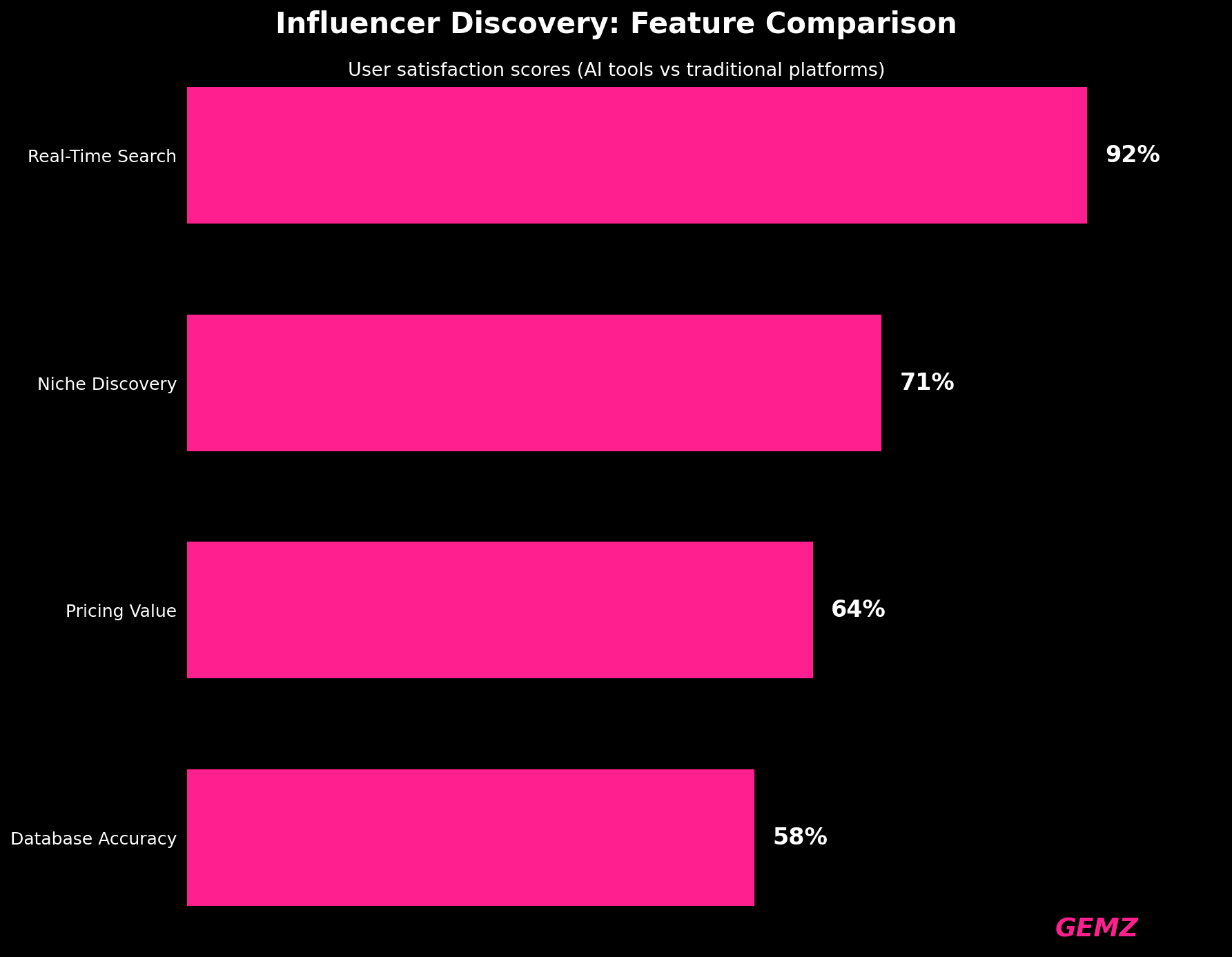
Data accuracy: Information reflects current reality, not historical snapshots.
Rising talent discovery: New and emerging creators appear as they gain traction—not after they’re already established.
Niche accuracy: Pivots are immediately visible. You won’t outreach to creators who’ve moved on.
Engagement reality: Current engagement metrics, not cached numbers that may no longer apply.
Contact validity: More likely to reach creators through current information.
The Gemz Approach
Gemz combines real-time scanning with AI-powered relevance ranking:
Real-time data:
- Continuous platform scanning
- Results based on current content and activity
- No database decay problem
AI relevance:
- Understanding of actual content topics, not just keywords
- Ranking by genuine fit, not just metrics
- Rising talent identification
Multi-platform:
- TikTok, Instagram, and YouTube in one search
- Cross-platform creator visibility
Transparent pricing:
- Glow Up: $99/mo
- Viral Surge: $249/mo
- Fame Flex: $499/mo
When Database Tools Still Make Sense
To be fair, databases aren’t always wrong for every use case.
Historical Analysis
If you need to understand how a creator’s metrics have changed over time, databases with historical data provide value that real-time tools don’t.
Competitive Intelligence
Databases tracking brand partnerships can show historical competitor activity that point-in-time scans miss.
Portfolio Management
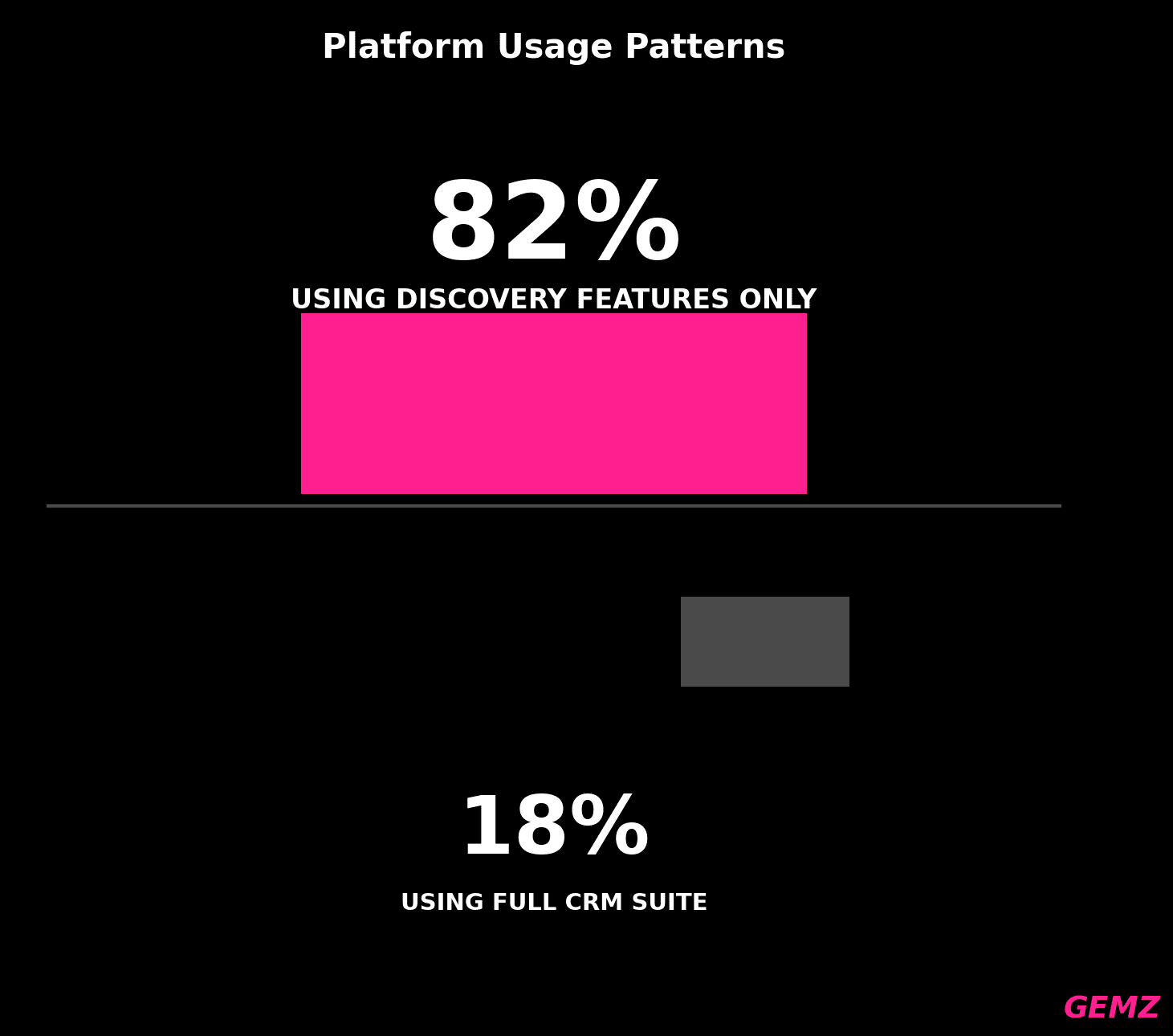
For agencies managing many existing relationships, database-style CRMs help track partnership history.
Due Diligence Verification
Using database tools as a secondary verification source (alongside real-time discovery) can provide useful context.
The Hybrid Approach
Many sophisticated teams use:
- Real-time tools for discovery and current verification
- Database tools for historical context and relationship management
Switching from Database to Real-Time Discovery
Making the transition is straightforward.
Step 1: Assess Current State
Audit your current tool:
- Run the spot-check tests described above
- Calculate your outreach efficiency rates
- Document time spent on discovery and vetting
This establishes a baseline for comparison.
Step 2: Parallel Testing
Run both approaches:
- Keep current database tool active
- Sign up for Gemz or similar real-time tool
- Run same campaign searches through both
- Compare results: accuracy, relevance, time spent
Step 3: Measure Outcomes
Track real results:
- Outreach response rates by source
- Campaign performance by creator discovery method
- Time spent on discovery and vetting
Real-time discovery typically shows improvement within 1-2 campaign cycles.
Step 4: Complete Migration
When confident:
- Cancel database subscriptions
- Build new workflows around real-time discovery
- Document process for team adoption
Building Processes for Accurate Data
Beyond tool selection, process matters.
Verification Workflows
Always-verify approach: Never outreach without manual verification of:
- Recent posting activity (within 2 weeks)
- Content relevance (check last 5-10 posts)
- Engagement on recent content
- Profile information accuracy
Verification timing: Verify within 48 hours of outreach. Data older than that may already be stale.
Documentation Standards
Track accuracy:
- Log database accuracy issues when discovered
- Note which data points are most frequently wrong
- Quantify impact on campaign efficiency
This data supports tool evaluation and process improvement.
Feedback Loops
Learn from failures: When outreach fails due to data issues:
- Document the specific problem
- Trace back to data source
- Adjust discovery process accordingly
Frequently Asked Questions
How often should influencer data be updated to be reliable?
For most use cases, data older than 1 week has significant accuracy risks. TikTok data specifically can become stale within days due to rapid algorithm and trend changes. Real-time scanning eliminates this concern entirely.
Can I trust any influencer database’s data?
All database-style tools have the same fundamental limitation: they capture snapshots that decay. Some are better than others—premium tools with more frequent updates and larger infrastructure will be more accurate—but none can match real-time scanning for current accuracy.
What’s the most common inaccurate data point in influencer databases?
Engagement rate is typically the most misleading metric. It changes constantly based on content performance, algorithm shifts, and posting frequency. Follower counts are actually more stable than most other metrics.
How do I know if a creator has pivoted niches?
Check their last 10-15 posts manually. If the content doesn’t match what their database profile suggests, they’ve likely pivoted. Real-time tools catch this automatically; databases often lag by weeks or months.
Is real-time discovery more expensive than database tools?
Not necessarily. Gemz starts at $99/month—comparable to many database tools. When you factor in time savings and improved campaign performance from better data, real-time tools often deliver better ROI.
Should I stop using influencer databases entirely?
For primary discovery, real-time tools are superior. But databases can still provide value for historical analysis, relationship management, and secondary verification. Many teams use both strategically.
Stop Trusting Stale Data
The influencer database model is fundamentally flawed. Data captured yesterday might not reflect reality today, and data captured last month is almost certainly wrong.
Every campaign built on inaccurate data risks:
- Wasted outreach effort
- Partnership mismatches
- Underperforming results
- Missed opportunities with rising talent
Real-time discovery solves this by showing you what’s actually happening—not what happened when someone last ran a scraper.
Try Gemz →
Real-time scanning. AI-powered relevance. Data you can actually trust.
Find creators based on who they are today, not who they were last month.
Related reading:
- The Complete Guide to Influencer Discovery →
- Best Modash Alternative →
- Best Heepsy Alternative →